The product
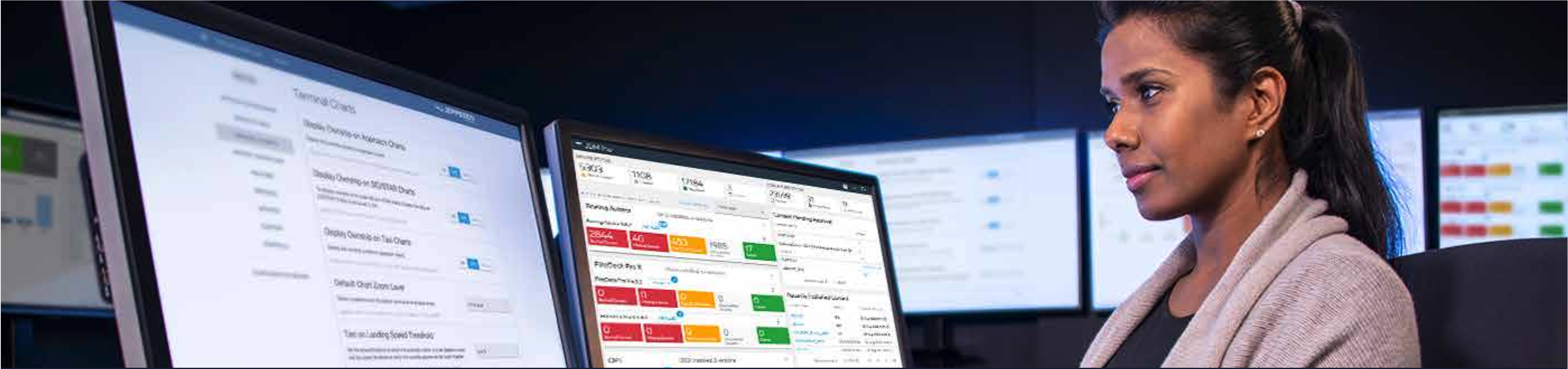
Jeppesen Distribution Manager Pro (JDM Pro) is the aviation industry's most widely used content distribution platform. It manages and delivers flight-critical navigational data, charts, and other content to FliteDeck Pro and other Electronic Flight Bag (EFB) applications used in the cockpit. At the time of this work, JDM Pro was distributing 40TB of data per month to over 400 aviation organizations and more than 400,000 devices, enabling over 110 million paperless flights.
The primary users of the platform were the administrators managing this distribution: airline operations teams, fleet managers, and Jeppesen account representatives. Their work was operationally critical: incorrect or delayed content distribution could create disruptions in flight operations.
The problem
The existing JDM Pro interface was outdated and not designed around how administrators actually worked. Straightforward tasks like managing device assignments, monitoring distribution status, and configuring group-based content rules required too many steps and too much interpretation. Administrators were contacting support for things a well-designed interface should have handled.
The platform's scale meant that even small usability failures were multiplied across hundreds of organizations worldwide.
When the stakes are operational disruptions to commercial flight, "confusing interface" is not an acceptable design outcome.
The work
I owned the full UX process for JDM Pro: research, information architecture, interaction design, and front-end delivery. That meant running feedback sessions and usability testing with active administrators, and surveys to quantify the patterns. Design output was prototyped Angular code that Jeppesen's back-end team integrated directly into the platform.
The research pointed consistently to the same failures: workflows that didn't match mental models, status information that was hard to parse at a glance, and device management patterns that required administrators to hold too much context in their heads. The redesign addressed each directly: clear device and group status at a glance, streamlined content assignment workflows, and a dashboard that surfaced what needed attention without requiring administrators to go looking for it.
Because design output was working code rather than static mockups, decisions were validated in real interfaces before back-end integration. The engineering team's front-end burden was removed entirely.
The outcome
The redesign reduced support contacts by more than 80%. Administrators were able to complete core tasks without escalating to support, which had been a persistent pattern with the previous interface. At the scale JDM Pro operates, reducing support dependency across 400+ organizations represented meaningful operational improvement for both Jeppesen and its customers.

40TB
DATA PER MONTH
Distributed to aviation organizations worldwide.
400K+
DEVICES
Pilot EFB devices receiving flight-critical content.
110M+
PAPERLESS FLIGHTS
Enabled by the platform.